



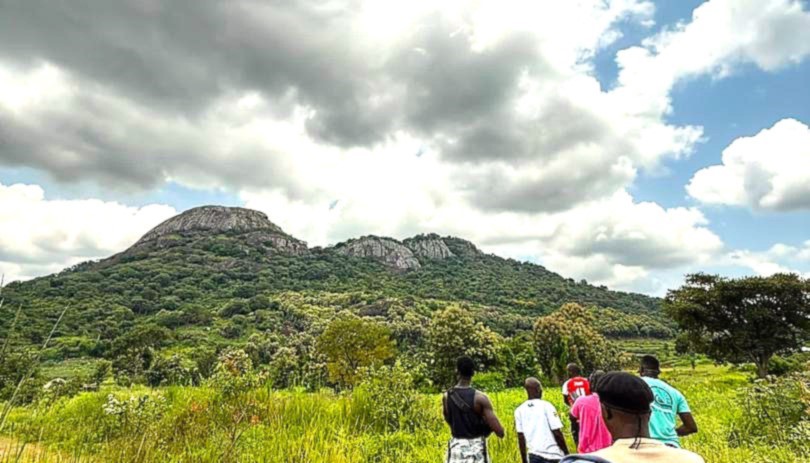
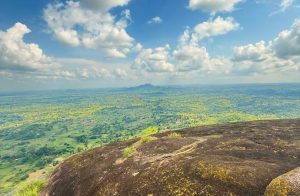
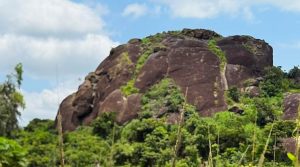
In the far northwestern corner of Uganda, nestled within Koboko district along the border with the Democratic Republic of the Congo, lies Mount Liru.
This mountain is more than just a dormant volcano; it represents a convergence of stunning landscapes, rich biodiversity, and profound cultural heritage, making it an emerging ecotourism destination for the adventurous traveler seeking authentic Ugandan experiences.
Mount Liru rises to an elevation of 1,388 meters (4,554 feet) above sea level, making it the second-highest mountain after Mount Wati in Uganda’s West Nile region. The mountain derives its name from Liru village, in which it is located along Lurugo road.
For the local Kakwa people, Mount Liru holds profound cultural and spiritual significance. It features prominently in their origin myths and creation stories, much like Uluru does for the Australian Anangu people. This connection transforms the mountain from a mere geographical feature into a living cultural landscape where every rock formation, cave, and stream carries ancestral meaning.

The Ecotourism Experience
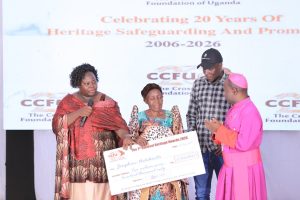
Mount Liru’s development as an ecotourism site started in 1992 by Hajj Abdulai Yusuf Banya, who has planted over 4000 trees, 1200 fruit trees, and has set up over 70 beehives. The site focuses on a holistic approach that integrates nature, culture, and community. The experience encompasses several interconnected activities;
Mountain Hiking and Adventure
The primary draw is, of course, the hiking experience. The trek offers varying challenges suitable for different fitness levels, including cave exploration of the Awudi caves that used to serve as a hideout during the slave trade in the 19th Century. Hikers who reach the summit of Mount Liru enjoy rewarding 360° views of WestNile who later proceed to Yaki stream during their return journey. The stream is sacred to the Kakwa people; it is believed that when its waters are taken by the only children of the family, they disappear into the Nile.
Agro-Tourism
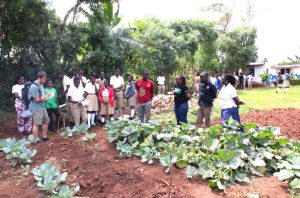
Visitors can also engage with local agricultural practices such as; live stock.
management and crop farming demonstrations, forestry education about native tree species, Apiary (beekeeping) experiences, conservation activities like tree planting initiatives, farm and orchard tours.
Cultural Immersion
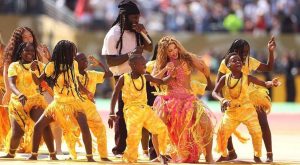
The mountain provides opportunities for authentic cultural exchange through traditional craft-making workshops, camping and folklore storytelling sessions, Kakwa culinary experiences, and traditional dance performances.
Wildlife
The mountain’s ecosystem supports diverse wildlife, including patas monkeys, black and white colobus monkeys, porcupines, baboons, reptiles, and a variety of bird species.

Best Time to Visit
Dry seasons (December-February, June-August) offer the most comfortable hiking conditions.
What to Bring
- Sturdy hiking shoes for uneven mountain terrain
- Adequate water – more than you think you’ll need
- Sun protection – hat, sunglasses, sunscreen
- Camera (while being respectful of cultural sensitivities)
- Notebook to record the experience
Conservation and Community
Mount Liru represents a model for sustainable ecotourism development in Uganda. The integration of conservation education with tourist activities creates a virtuous cycle where visitors learn about and contribute to preserving the mountain’s biodiversity, while their presence supports local communities through guided tours, camping, craft sales, and cultural exchanges.
For travelers moving beyond Uganda’s more famous gorilla trekking destinations, Mount Liru offers an authentic cultural encounter with the Kakwa people, a developing ecotourism experience where your visit directly supports conservation, biodiversity in a less-visited region of Uganda, and the satisfaction of exploring a destination before it appears on mainstream tourism itineraries.
As global travelers increasingly seek meaningful, sustainable, and off-the-beaten-path experiences, destinations like Mount Liru represent the future of thoughtful tourism. Mount Liru awaits, ready to share its stories, landscapes, and cultural richness with those willing to venture to Uganda’s northwestern reaches.


