


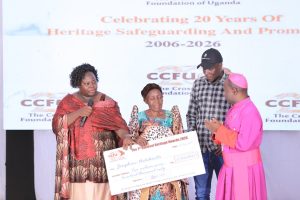


On Friday August 8th, 2025, the Cross-Cultural Foundation of Uganda (CCFU), in partnership with the Equal Opportunities Commission (EOC), commemorated the 2025 International Day of the World’s Indigenous Peoples at Ndere Cultural Centre in Kampala.
It is unfortunate that while many communities are developing, expanding and thriving both economically and socially, there are marginalized indigenous communities huddling in isolated, hard to reach places – apparently not because they can’t keep pace with the contemporary social dynamic but because they dread clashes with the more populous, nationally recognized groups.
According to CCFU, many Indigenous communities remain unrecognised in Uganda’s 1995 Constitution. Groups such as the Benet, Bakingwe, Bagabo, and Maragoli are excluded from the national list of ethnicities, making them ineligible for certain legal rights and services. They are also not listed in databases maintained by the National Identification and Registration Authority (NIRA) or the Electoral Commission, making it difficult to acquire national IDs or vote.
Since 1994, the International Day of the World’s Indigenous Peoples is observed globally every year on 9th August to raise awareness and protect the rights of the World’s Indigenous population.
This year’s theme, “Indigenous Peoples’ Right to Self-Determination: A Pathway for Food Security and Sovereignty,” highlights the urgent need to uphold the rights of Indigenous Minority Groups (IMGs) who face persistent threats to their identity, livelihoods and access to critical resources.
To commemorate the day, CCFU an d Equal Opportunities Commission organized an event that featured a dialogue, cultural exhibition, and networking sessions to encourage inclusive policy-making, cultural appreciation and partnerships that prioritize indigenous voices.
The event brought together stakeholders from government, civil society and Indigenous communities from Karamoja, Rwenzori, Elgon, and West Nile regions to reflect on the challenges IMGs face and explore collaborative solutions for inclusion, development, and cultural preservation.
What stakeholders say

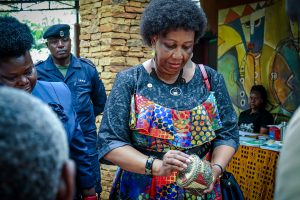
Speaking at the event, Mariam Wangadya, the Chairperson of Uganda Human Rights Commission emphasized that the case of marginalized indigenous groups is not a thing of the past but living communities struggling for recognition and basic human dignity in their own country.
“These are human beings who equally deserve rights like we do, yet we somehow act like they are invisible. Even existing constitutional rights that should apply to these groups are really not practical. As Uganda Human Rights Commission, we are advising line government MDAs to appreciate the plight of MIGs and consider them in National Development Plans not as museum assets but as guardians and innovators of culture,” Wangadya said.
She emphasized that groups like the Batwa and the Ik who were run out of the forests on the basis of better conservation approaches were the original protectors of these ecosystems for centuries and deserve better representation and service in their new found communities.
“In many parts of Uganda, Indigenous Minority Groups face marginalisation that threatens their way of life, their identity and their ability to thrive. This year’s theme speaks directly to the urgent need to uphold their right to self-determination, not only as a matter of human rights, but as a foundation for achieving food sovereignty, sustainable development and national cohesion,” says Ms. Barbra Babweteera, Executive Director of CCFU.

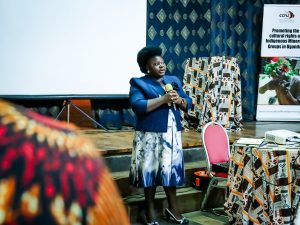
According to Ms. Babweteera, the further these groups retreat into isolation, the more unnoticed their issues get and the quicker their existence is wiped out “starting with their language which is taken over by more prominent ones, their traditions that are deemed evil or unworthy and in the long run, their whole identity.”
The Equal Opportunities Commission, a key partner in this year’s commemoration, reaffirmed its commitment to eliminating marginalisation in all forms.
“As a Commission, we recognise that Indigenous Minority Groups continue to be left behind in development planning and service delivery. We are working to ensure that their voices are heard and that their rights to land, education, and cultural expression are protected. Today’s dialogue is an important step toward justice and equity for these communities,” says Ms. Safia Nalule Juuko, Chairperson of the Equal Opportunities Commission.
CCFU’s work with over 20 IMGs includes advocacy for cultural rights, documenting oral histories, supporting cultural resource centres and museums, and offering livelihood support through grants, skills training, and education.
Through these efforts, communities such as the Benet, Batuku, Banyabindi, Basongora, and Batwa, among others, are reclaiming their heritage and improving their socioeconomic conditions.
“For years, we felt invisible. But with CCFU and EOC’s support, our culture is now being recognised and respected. Through our platform, we have engaged district leaders, shared our history, and advocated for the protection of our sacred sites. We are no longer silent, we are organised and hopeful,” says Emmanuel Kyalimpa, Chairperson of the Rwenzori IMG Platform.
One of the success stories from CCFU’s support is Eunice Chesang, a member of a women’s group from the Benet community in Elgon. Her group received a small grant and training in value addition and enterprise management.
“Before the support, we only made crafts for home use. Now, we produce high-quality cultural crafts and sell them at local markets and exhibitions. Our income has tripled. I was able to take my children back to school. Our culture is our strength and our business,” Eunice said

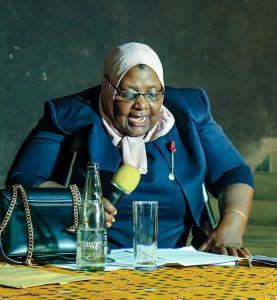
Critical Issues facing IMG communities
During the event, CCFU and participating communities raised several concerns and recommendations to duty bearers and development actors. These included but not limited to; Limited access to cultural resources and land in protected areas which remains a major challenge.
“Many sacred sites lie within national parks and forest reserves, yet communities are often denied access by authorities such as the Uganda Wildlife Authority (UWA) or the National Forestry Authority (NFA). These sites, including caves, sacred rivers, salt licks, and burial grounds, are central to cultural identity and spiritual practice. Communities such as the Batwa and Benet continue to face eviction or restricted access, threatening their cultural survival,” the concerns statement reads in part.
Affected communities thus called on UWA and NFA to grant Indigenous groups regulated access to these resources and to involve them in the sustainable co-management of cultural sites. They also call for special consideration in revenue-sharing schemes, resettlement, and compensation for those forcibly removed from ancestral lands.
These community representatives also highlighted the decline of Indigenous languages especially in schools where children from minority groups are taught in dominant regional languages rather than their own.
“This has led to the erosion of cultural identity and knowledge systems. For instance, the Paluo children in Kiryandongo now learn in Acholi or Langi, and the Benet children in Kween district are taught in Kupsabiny instead of Kumosop,” the statement further reads.
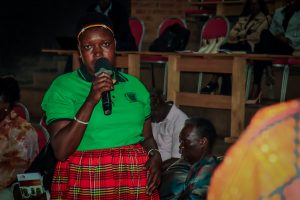
What the Minority Indigenous Groups want
The communities urge the Ministry of Education and Sports to support the development of orthographies for their languages, integrate them into school curricula, and provide learning materials in indigenous languages.
Community leaders have also called on the government to expedite constitutional amendments to include all Indigenous groups and to remove derogatory names such as “Chope” and “Teuso,” replacing them with respectful alternatives like “Paluo” and “Ik.”
Communities want reserved parliamentary seats and administrative structures that reflect the presence and rights of Indigenous communities. This is aimed at countering the issue of political underrepresentation both at the district and national levels.
The communities also raised the alarm over the loss of cultural heritage, including traditional medicine, crafts, values, and practices due to population pressure, modernisation, and negative perceptions often promoted by religious institutions. The community leaders have appealed to the relevant government ministries and agencies to support the documentation and promotion of heritage practices, and to integrate cultural learning into the new competence-based curriculum for lower secondary schools.


