





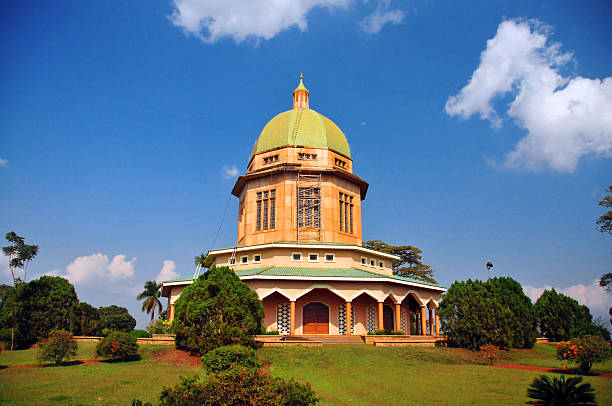
Outside the vibrant bustle of Kampala, an architectural and spiritual marvel rises on the serene Kikaya Hill, towering over semi-suburban homes littered across adjacent hills.
Known as the Mother Temple of Africa, the Bahá’í House of Worship in Uganda is a profound symbol of unity, a beacon of silent prayer, and a testament to a faith that champions the oneness of humanity.
For travelers, spiritual seekers, and architecture enthusiasts alike, this temple offers a uniquely tranquil and thought-provoking experience, unlike any other on the continent.
The Heart of the Bahá’í Faith
To appreciate the temple, one must first understand the core principles it embodies. The Bahá’í Faith, established in the mid-19th century, centers on the belief that all major world religions are part of a single, progressive revelation from one God.
Its central teachings champion the unity of all peoples, the equality of women and men, the harmony of science and religion, and the elimination of all forms of prejudice.
A Bahá’í House of Worship, therefore, is not a church, mosque, or synagogue in the exclusive sense. It is a “Silent Teacher,” a space open to every person, regardless of faith or none, dedicated solely to the worship of God.
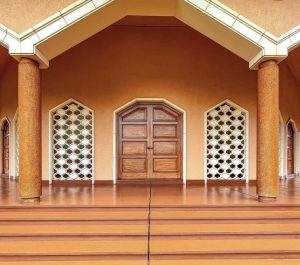
This universalism is physically expressed in its architecture. Every Bahá’í temple has nine sides and nine doors. The number nine symbolizes completeness and unity, and the doors welcome worshippers from all directions of the earth.
Inside the temple, you will find no altars, no pulpits, and no religious imagery. The only activity is the individual and collective act of prayer and meditation.
Designed by the English architect Charles Mason Remey, the temple’s groundbreaking construction began in 1958 and was completed on January 13, 1961.
The temple is both globally spiritual and intimately African, perfectly mirroring the Bahá’í principle of “unity in diversity.”
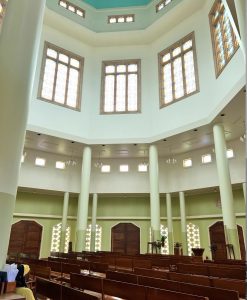
The construction was an act of faith itself. While overseen by a Bahá’í contractor from England, the building was raised by the hands of skilled Ugandan laborers. The interior is adorned with beautiful local timber in the form of benches.

A Visit to the Temple
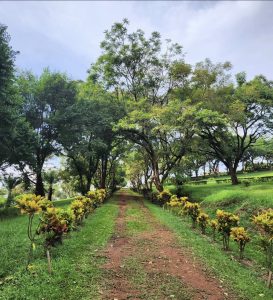
Visiting the Bahá’í Temple is a journey into tranquility. As you ascend Kikaya Hill, the city’s noise fades, replaced by the sounds of birds and wind rustling through the expansive, manicured gardens.
The 52-acre property is a haven of native and exotic plants, inviting quiet contemplation even before you reach the temple doors.
Stepping inside, light filters through the ornate arches, casting intricate patterns on the floor and the hundreds of simple wooden seats arranged in concentric circles. The space feels simultaneously vast and intimate. The silence feels active and nurturing. While inside, you may hear the soft recitation of a prayer in Luganda or English.


A Catalyst for Community Wellness
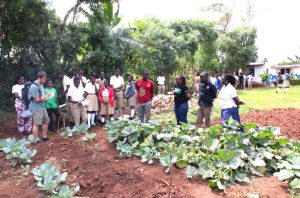
The temple is not an isolated monument. It is the vibrant heart of a community dedicated to service. The Bahá’í community in Uganda, one of the oldest and most established in Africa, engages in a host of educational and social development initiatives inspired by their faith.
Around the temple, you may find children’s classes focused on moral education, junior youth groups empowering adolescents, and study circles where adults explore spiritual concepts and their application to social progress.
It is a spiritual powerhouse meant to inspire and equip individuals to improve the world. It stands as a constant, graceful reminder that worship must be coupled with service, and that prayer should translate into actions that foster unity and justice.

A Symbol for Uganda and the World
In a nation as religiously diverse as Uganda, with deep Christian and Muslim traditions, the Bahá’í Temple occupies a unique and respected niche. It is a symbol of harmony that complements rather than competes with other faiths.
Its presence speaks to a hopeful vision for the country and the continent; that different peoples can come together, not in sameness, but in a celebration of shared humanity.
For the global visitor, the Mother Temple of Africa is an essential stop. It rivals the grandeur of any European cathedral or ancient Asian temple, not through opulence, but through the sheer power of its innovative design and its radical inclusivity. It challenges our conventional notions of what a religious space should be and offers a tangible vision of what the future could look like.

What to Know Before You Go:
- Location: Kikaya Hill, Kampala (approximately 7 km from the city center).
- Admission: Open to all. The temple operates on voluntary contributions.
- Dress Code: Modest dress is respectfully requested as a sacred space.
- The Gardens: Allocate time to walk the peaceful gardens, which offer panoramic views of the surrounding hills.
- The Information Center: A small center at the site provides excellent resources on the history of the temple and the principles of the Bahá’í Faith.
As you leave Kikaya Hill, descending back toward the energy of Kampala, the image of the white lotus lingers. It is an enduring impression of silence, light, and a hopeful idea that from the rich soil of Africa, a symbol for the unity of the entire world can beautifully bloom.


