



Travelling along the Mbarara-Masaka highway in southwestern Uganda, you’ll find a unique destination that has become a must-visit for those seeking to understand the soul of the region where the legendary long-horned Ankole cattle graze.
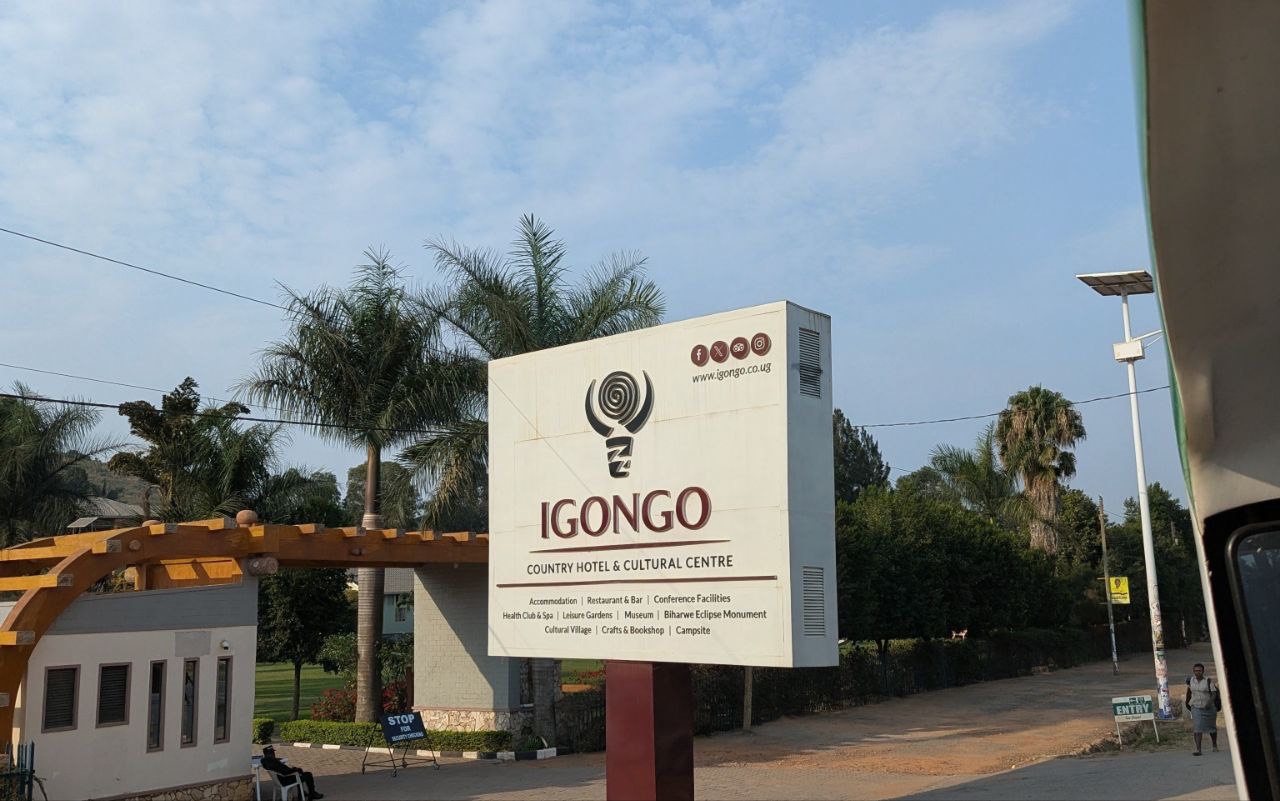
Igongo Cultural Centre is more than a museum; it is a living bridge connecting visitors to the rich heritage of the Ankole kingdom and beyond.
The centre’s motto, “Wisdom is rooted in the past,” perfectly captures its mission to preserve the profound cultures of western and south-western Uganda.
Opened to the public in 2011 and commissioned by Uganda’s President H.E Yoweri Kaguta Museveni, this cultural centre has transformed into one of the country’s most visited cultural sites.
A Place Steeped in Legends
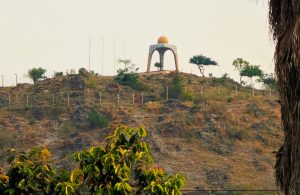
Igongo’s location is historically sacred. The area is located around the Biharwe hill, which is central to two pivotal legends in Ankole history.
The Eclipse of Biharwe (1520 AD); During a cattle raid, a sudden solar eclipse darkened the sky. Believing it was a bad omen, the invaders fled, leaving behind their plundered cattle and saving the kingdom. The Biharwe Eclipse monument on top of the Biharwe hill commemorates this event.
The Creation of Lake Mburo; In another era, catastrophic floods threatened the land. King Rugamba’s diviners performed rituals atop Igongo hill, appeasing the spirits and causing the waters to recede, forming the present-day Lake Mburo.

Journey Through the Centre
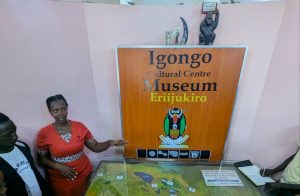
The Eriijukiro Museum (The Museum of Western Uganda)
This is the heart of Igongo. As the largest museum in Western Uganda, it houses an unparalleled collection that tells the story of the region’s agrarian and pastoral peoples, particularly the Bahima cattle-keeping tribe.
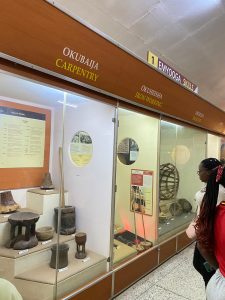
The exhibits showcase everything from traditional milking pots and calabashes to Ankole cultural regalia and detailed histories of the Obugabe (kingship). It provides a fascinating look at how these communities have adapted to new technologies, even documenting successful collaborations with European universities on cheese-making.

Itaramiro Cultural Village
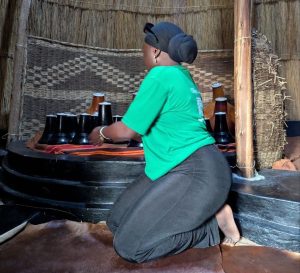
Step out of the museum and into a living history exhibit. Itaramiro, meaning “a place where people gather,” is a recreated traditional homestead with grass-thatched huts. Visitors gain an insight into the day-to-day lives of traditional cattle keepers (Bahima) and crop farmers (Bairu) back in the day.
Mpororo Court (Kitami Palace)
This section is dedicated to the legacy of powerful female leadership, honoring the powerful 18th-century female ruler, Queen Kitami. The court displays sculptures, royal drums, milk pots, and weapons, celebrating her legacy and the enduring role of women’s councils in Ankole society.
Nkwanzi Crafts Shop and Bookstore
No cultural journey is complete without a tangible memory. The on-site shop offers beautiful handmade jewelry, bags, and African garments. The bookstore is a treasure trove for those wanting to delve deeper into literature on the Ankole, other Ugandan kingdoms, and the nation’s broader history and politics.
Hands-On Activities (On-request)
Beyond the artifacts, Igongo brings culture to life through interactive experiences. The museum staff can arrange bespoke activities which include:
- Learning to make Eshabwe, a traditional ghee sauce, from Ankole cow milk.
- Participating in millet bread-making and grinding.
- Visiting a local Ankole cow farm for a hands-on milking experience.
- Enjoying vibrant performances of traditional Ankole dances and music.
The Igongo Country Hotel
For those wishing to stay, the centre includes an on-site award-winning Igongo Country Hotel that offers comfortable accommodation that blends cultural themes with modern comforts; a swimming pool, gym, spa facilities, restaurants serving both local and international cuisine, beautiful gardens, and state-of-the-art conference facilities for events.

Prime Location of the Centre
Igongo’s position along the busy tourism corridor makes it an ideal cultural stopover. It connects to Uganda’s most famous destinations such as; Lake Mburo National Park which the closest national park to the centre, famous for herds of zebra, impala, and eland, Bwindi Impenetrable National Park, a UNESCO World Heritage Site and home to nearly half the world’s endangered mountain gorillas and Queen Elizabeth National Park which is Uganda’s most popular savanna park, offering classic game drives to see elephants, buffaloes, hippos and the famous tree-climbing lions.
Other notable sites include: the iconic Kayabwe equator monument, island-dotted Lake Bunyonyi, Mgahinga Gorilla National Park, which is another gorilla trekking destination, with the unique bonus of golden monkey tracking.

Why Igongo Matters in Modern Uganda
Igongo serves crucial cultural functions such as preserving endangered traditions for future generations, educational programs for schools and youth, supporting local artisans through the crafts markets, and also showcases successful cultural preservation as a model for other communities.
A visit to the Igongo Cultural Centre adds cultural depth to Uganda’s wildlife safari experience. The crucial context of people and history enriches the understanding of the land. Many visitors find it provides the perfect cultural interlude between national park adventures.


