
Uganda’s transition towards sustainable food systems is increasingly being shaped not only by what happens on farms, but also by what young people learn in classrooms.
While agriculture remains central to livelihoods, employment and national development, the understanding of sustainable food production remains limited among many small-scale farmers, consumers and even educated citizens.
Many struggle to distinguish farming practices that regenerate ecosystems and protect human health from those that gradually degrade soils, diminish biodiversity and increase health risks. As a result, the country’s transition to sustainable agriculture continues to face one persistent obstacle: a gap in knowledge.
At the heart of this conversation is agroecology, an approach recognised by the Food and Agriculture Organization (FAO) as a pathway to resilient and sustainable food systems. Rather than focusing solely on production, agroecology optimises interactions between plants, animals, humans and the environment while promoting socially equitable and economically viable food systems.
The consequences of this knowledge gap are becoming increasingly visible. Heavy reliance on synthetic agrochemicals has contributed to declining soil fertility, biodiversity loss and greater vulnerability to climate shocks. At the same time, concerns over public health continue to grow, with exposure to hazardous agrochemicals and poor dietary patterns contributing to a rising burden of non-communicable diseases.
A 2025 World Health Organization (WHO) report indicates that in 2021, chemical hazards linked to contaminated food accounted for 73 percent of global deaths associated with foodborne chemical exposure. Most of these were attributed to inorganic arsenic (42 percent) and lead (31 percent), both strongly associated with increased risks of cardiovascular diseases and cancer.
However, a quiet transformation is taking shape as schools begin introducing young people to farming systems that prioritise healthy soils, nutritious food and environmental stewardship. Eastern and Southern Africa Small-Scale Farmers Forum (ESAFF) Uganda, with support from Humundi, is leading this effort through school-based agroecology clubs.
Now established in 21 schools across Uganda, these clubs provide practical learning spaces where students explore biodiversity conservation, soil health, ecological farming, food sovereignty, climate resilience and sustainable food systems.
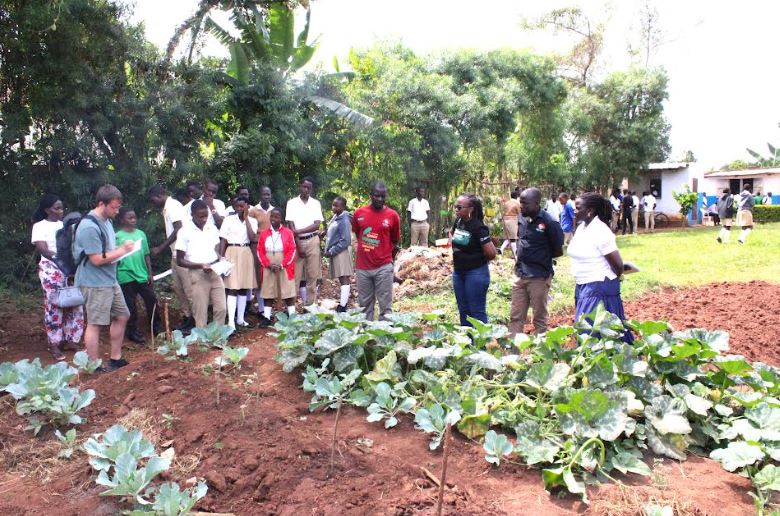
On June 22, 2026, a joint team from ESAFF Uganda and Humundi visited St. Joseph’s Naama Secondary School in Mityana District to assess the progress of one such club. Beyond interacting with learners and teachers, the visit offered a glimpse into how agroecology education is beginning to influence the next generation of food producers, consumers and decision-makers.
Students guided visitors through their agroecological garden, demonstrating practical techniques including soil conservation, inter-cropping, crop rotation and many others.
For Serwada Joseph, an S.5 student and member of the school’s agroecology club, the lessons extend beyond the school compound. He noted that increasing exposure to agrochemicals has contributed to health risks, including respiratory complications and other non-communicable diseases, often driven by limited public awareness.
“If such initiatives are expanded in schools, we will see a reduction in deaths due to nutritional diseases linked to chemical use in farming. Students are getting to know, and this is helping to cascade information to their parents and peers, and this is a step in the right direction toward creating healthier communities,” he said.
Another student, Dantonio Peace Patricia, urged the Government and the Ministry of Education and Sports to integrate agroecology into the education carricula and collaborate with organisations such as ESAFF Uganda to establish agroecology clubs across schools nationwide. According to her, doing so would strengthen nutrition security, improve food safety and nurture a generation committed to building sustainable food systems.
Perhaps, the most striking demonstration of the programme’s broader impact came when Nantongo Patricia, also an S.5 student, presented an analysis of Uganda’s 2026/27 National Budget. Her presentation reflected ESAFF Uganda’s wider work under its Public Agriculture Financing and Accountability thematic area, which equips citizens, including students with the skills to understand, interpret and critically engage with government budgeting priorities and their implications for communities.
Linking Schools to Community Agroecological Systems
The school’s agroecology club works closely with Magongoro Community Agroecology School, creating an important bridge between classroom learning and practical farming experience.
Through this partnership, students learn hands-on techniques such as producing liquid organic fertilizer, before replicating these practices in their school gardens, reinforcing experiential learning and demonstrating how ecological farming principles can be applied in real-life settings.
Across the country, ESAFF Uganda has established 31 Community Agroecology Schools as an arena where small-scale farmers come together to identify the challenges they face while transitioning to agroecology and collectively develop locally appropriate solutions. One of those farmers is Bugembe Patrick from Magongoro Village in Mityana District.
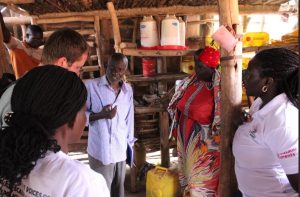
Mr. Bugembe has adopted practices including intercropping, agroforestry, soil regeneration and resource recycling on his five-acre farm, which has since become a demonstration garden where other farmers come to learn before replicating similar practices on their own farms. His integrated farming system combines coffee, bananas, maize and cassava with poultry, zero-grazing cattle, pigs and goats.
Beyond generating multiple sources of income, the system improves soil fertility, reduces production costs and minimises waste by ensuring that resources circulate within the farm.
“At my farm, I practice agroecology. It encourages intercropping, which is why you find coffee, bananas, maize, cassava, and trees on the same piece of land. I use manure from animals in the garden, and crop residues are also fed back to animals. That is why I keep cows, goats, pigs, and poultry, so that nothing goes to waste,” he explained.
Students nurturing agroecological gardens may become tomorrow’s farmers, policy makers and nutritionists. Investing in their understanding of sustainable food systems is an investment in Uganda’s environmental conservation, public health and food security.