




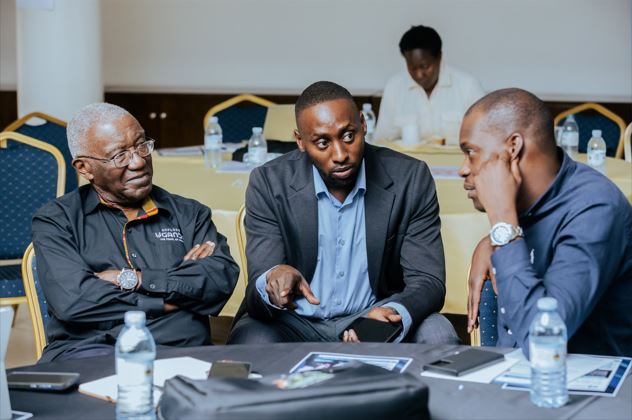
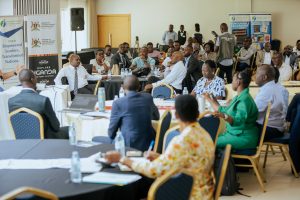
The Ministry of Tourism, Wildlife, and Antiquities (MTWA) last week held its third top management retreat in Jinja, drawing in leaders and stakeholders from the Ministry and her sister agencies.
Themed “Reflecting, Transforming and Aligning for a Competitive Tourism Destination,” the retreat created a platform for high level engagements on assessing the sector’s performance and charting new strategies for development over the next 5 years.
In a major highlight of the three-day retreat, the Ministry officially launched the Tourism Strategic Plan 2025/26–2029/30, a comprehensive Shs 1.34 trillion roadmap designed to guide policy implementation and programme delivery for five years.
The plan builds on achievements from the previous strategic period, which saw international tourist arrivals rebound to approximately 1.64 million in 2025, surpassing the pre-covid 19 numbers.
Speaking about the sector’s recovery, Tourism Minister Col (Rtd)Tom Butime said that this milestone signals renewed global confidence in Destination Uganda and reflects the impact of coordinated recovery efforts by both government and the private sector.
“Tourism is one of the country’s economic drivers. This recovery has created jobs, sustained livelihoods and supported various businesses,” Butime said.

The Strategic Plan focuses on five key priorities aligned with the Fourth National Development Plan (NDP IV) and the government’s Tenfold Growth Strategy including; Expanding Uganda’s appeal to both international visitors and local travellers, with domestic tourism already surpassing pre-COVID levels by 15.5%, Enhancing existing attractions while creating new experiences, including water-based tourism, faith-based tourism, agro-tourism, and culinary tourism, and Addressing critical staffing gaps across the sector, with the Ministry currently operating at only 55.3% of its approved structure (142 out of 257 positions filled).
Upgrading roads and visitor amenities, including the Development of Source of the Nile Project (Phase II) now at 60% completion and Mt. Rwenzori Infrastructure Project at 55% completion, and Ensuring seamless collaboration between stakeholders, including the operationalisation of the Tourism Development Programme Working Group are also priority areas in the 5-year Plan.
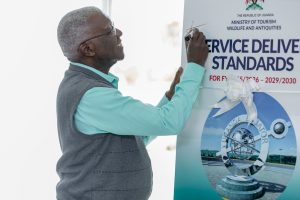
Alongside the Strategic Plan, the Ministry also launched two other critical documents; The Client Charter and The Service Delivery Standards, both aimed at boosting standards, coordination and competitiveness across the industry.
The strategic plan sets ambitious targets for Uganda’s tourism sector over the next five years, including; Increasing tourism foreign exchange earnings from USD 1.025 billion to USD 4 billion, extending the average tourist’s length of stay from 7.6 nights to 10 nights, raising average inbound expenditure per leisure tourist from USD 1,550 to USD 2,500, rogwing tourism’s direct contribution to total tax revenue from 2.1% to 4.2% and boosting domestic tourism expenditure from Shs 3,675 billion to Shs 5,350 billion.
MTWA reinforces collaboration with Busoga Kingdom on tourism promotion
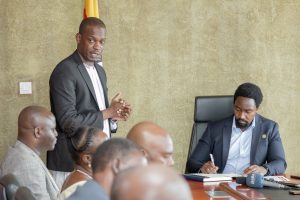
Beyond the retreat venue, MTWA’s Top Management delegation, led by State Minister for Tourism Hon. Martin Mugarra, paid a courtesy visit to the Kyabazinga’s Palace, where His Majesty William Gabula Nadiope IV emphasized the need for stronger collaboration between Busoga Kingdom and the Ministry.
The Monarch expressed gratitude for ongoing joint initiatives but called for their formalisation through an official Memorandum of Understanding (MOU) to accelerate tourism development in the Busoga sub-region.
His Majesty highlighted several key attractions with untapped potential, including: The Source of the Nile which is Uganda’s most iconic natural landmark, currently undergoing Phase II development – including a modern pier, viewing bridge, and restaurant facilities; Dolwe Island and historic slave caves near Bukaleba Forest, which require preservation and promotion.
The Kyabazinga reaffirmed Busoga’s commitment to conservation, cultural preservation, and positioning the kingdom as a major contributor to Uganda’s tourism growth.
In his remarks during the monumental visit, State Minister for Tourism Hon, Martin Mugarra commended the Kyabazinga for his unwavering support towards the growth of Uganda’s tourism particularly in the Busoga region which is immensely gifted with natural features.
“The diverse attractions in the Busoga sub-region have significantly contributed to increased tourism revenues and national economic growth as a whole,” Mugarra said.
The retreat also reflected on recent successes in sports tourism, a steadily growing discipline in Uganda’s tourism industry.
Minister Butime noted that “the Rwenzori Marathon and CHAN Games held in August 2025 further highlighted the growing potential of sports tourism” as a powerful driver for destination visibility and visitor arrivals.
Challenges and interventions
The strategic plan acknowledges several persistent challenges facing the industry, including underdeveloped tourism products that limit tourist stays, inadequate staffing with 115 vacant positions across the Ministry, encroachment on cultural heritage sites, and untitled land for most of these sites.
The plan outlines specific interventions to address these gaps, including filling all existing skilled staff vacancies at a projected cost of Shs 10 billion over the next five years.
With a total budget requirement of Shs 1,341.1 billion over five years, the Ministry faces a funding gap of Shs 813.95 billion. However, over 35% of the development budget (Shs 475.36 billion) is expected to be contributed by non-state actors, including development partners, private sector enterprises, and civil society.
The Ministry will implement a multi-pronged resource mobilisation strategy focusing on advocacy for increased budgetary allocations, strengthening revenue collection by sector agencies, operationalising the Tourism Development Levy, establishing a Tourism Development Fund, leveraging Public-Private Partnerships (PPPs), and engaging development partners.
With 1.64 million tourist arrivals recorded in 2025, surpassing pre-pandemic levels for the first time, the MTWA retreat comes at a moment of renewed confidence in Destination Uganda.
The gathering of top management, board members and senior managers from all Ministry agencies signals a sector determined to build on its recovery momentum.


