
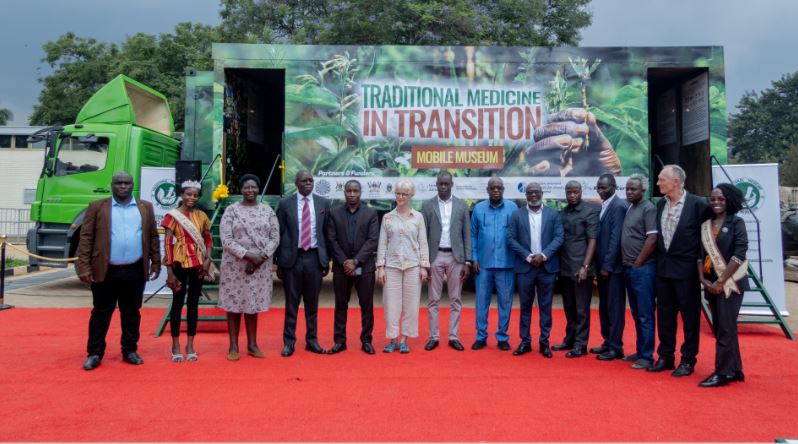
Aiming to counteract the overshadowing of ancient wisdom by modernization, Uganda has launched an innovative mobile museum initiative.
The “Traditional Medicine in Transition” mobile museum brings the nation’s healing heritage to communities, documenting, celebrating, and protecting indigenous medicinal knowledge.
This partnership between Ugandan and Swiss institutions positions the mobile museum as a vital bridge, connecting traditional healing practices with modern society. Unlike a traditional museum, it functions as a ‘living archive,’ shaped by those who hold and use indigenous knowledge.
The concept is simple yet powerful; instead of expecting communities to come to the museum, the museum will come to the people.
The exhibition commenced on Wednesday, February 25th at the Igongo Cultural Centre in Mbarara, before its second leg at the Uganda National Museum in Kampala on Friday, February 27th, where it was officially launched.
The event was officiated by the Honorable Martin Mugarra, State Minister for Tourism, Wildlife, and Antiquities.
Speaking at the launch, the Minister revealed that this mobile museum transforms research into interactive displays covering medicinal plants and ecological knowledge.
“Through this model, knowledge is decentralized, schools, cultures, institutions, and rural communities can directly engage with heritage,” he said.
The mobile museum is a direct response to the challenges faced by traditional medicine in Uganda, including the loss of biodiversity and the risk of ancient knowledge fading away as younger generations become disconnected from their roots.
By taking the exhibition on the road, the project aims to create spaces for learning, reflection, and reconnection with the wisdom embedded in local communities.
Through visual storytelling and displays of plant knowledge, visitors are invited to explore the role of traditional healers as custodians of medicinal heritage and understand how these practices adapt in a changing world.
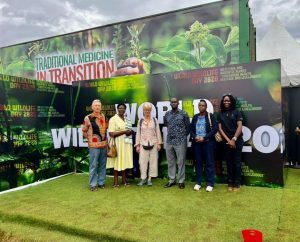
Why This Matters Now
The urgency of this initiative was highlighted during the COVID-19 pandemic, which exposed gaps in public healthcare and sparked a renewed interest in herbal medicine among both the public and policymakers.
The World Health Organization (WHO) actively encourages its member states to promote traditional medicine practices and integrate them into national health systems, recognizing their value in primary healthcare.
However, as the project’s background research notes, traditional medicine in Uganda is “confronted with a loss of its natural, cultural and intellectual resources.”
Medicinal plants and forests are threatened, and the deep knowledge of their application is in danger of being lost. The mobile museum directly confronts this by promoting sustainable knowledge transfer to younger generations.
A Powerful Collaboration
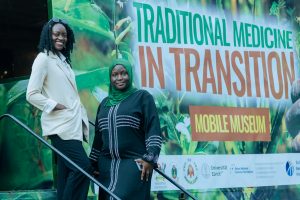
This initiative is a testament to the power of cross-disciplinary and international partnerships.
The mobile museum is made possible through a collaboration between leading academic and cultural institutions, including Makerere University, the Uganda National Museum, the Igongo Cultural Institute, the University of Zurich, and PROMETRA Uganda, an organization dedicated to promoting traditional medicine.
The project is generously supported by the Swiss National Science Foundation and the Swiss Agency for Development and Cooperation, reflecting a global recognition of the value of African indigenous knowledge.
Lending her voice to the project is culture and heritage storyteller Hilda Victoria Namulwana, who describes the exhibition as “an invitation to experience, listen and appreciate the stories that continue to shape how we heal.”
While Uganda’s mobile museum is unique in its focus on the nation’s specific heritage, it is part of a broader global trend to preserve traditional medicine through innovative and accessible formats.