






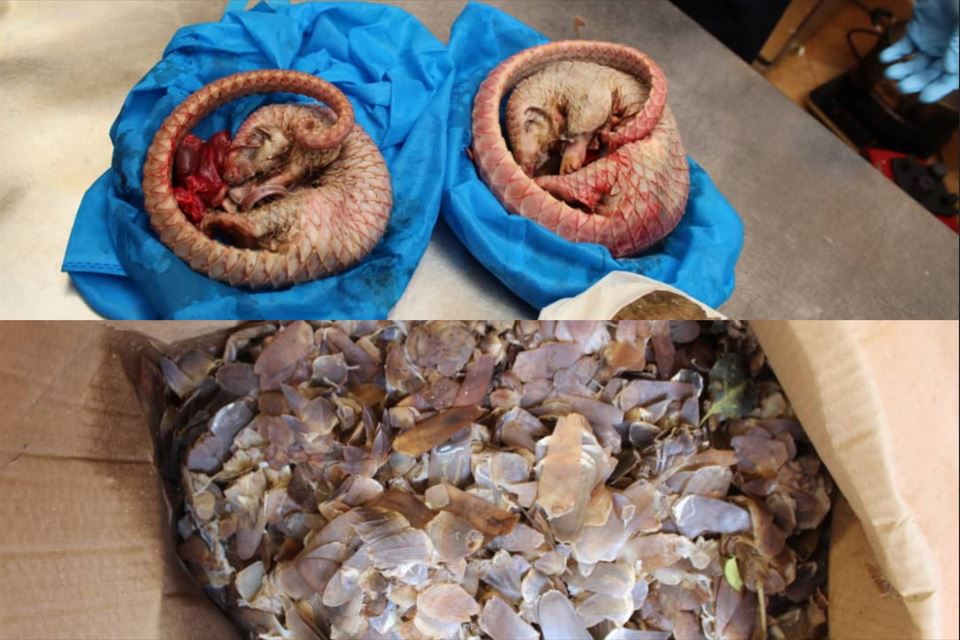
One would argue that it is unfair to have the organ meant to safeguard pangolins against the lurking predators in the wild be the very magnet that draws in the frantic desires of humans, hunting down the species for their scales and other body parts.
Like a wounded fish in shark territory, each drop of the blood is an unfortunate invite to the hungry killer. For pangolins, each scale is not just a Hail Mary for a new mother somewhere in China struggling to breastfeed, there is a hefty bounty to be bagged by whoever comes across it, harvests and delivers to the buyer.
While the world’s only scaly mammal has less natural predators, it’s survival is threatened by poachers and ambitious wildlife trafficking cartels feeding the insatiable, booming market for its organs, reinforced largely by traditional medicine practitioners who promise desperate, ailing clients a new chance at health – pangolin scales being the magic portion in the remedy.
80.7% of traditional medicine practitioners surveyed in a study conducted in 2023 by WildAid in Vietnam in collaboration with the Hue University of Medicine and Pharmacy in Vietnam, Choice (a Vietnam-based organization whose mission is to promote environmental conservation), the Thừa Thiên Huế Acupuncture Association (TAA) among other entities, stated that pangolin products “are useful for treating at least one type of ailment” with over half of all practitioners (52.7%) indicating that the scales are “an effective treatment for mammary gland blockages in lactating women.”
A research article published by Nature.com highlights other ailments that are “healed” by concoctions laced with pangolin scale ash. Intense crying in babies – irrespective of the cause, is one of the ills said to be treated with pangolin scales.
Other communities have gone as far as using oils infused with pangolin scale extract to “cast out evil spirits from women”. Deafness and malaria have also been reported among ailments “cured” by pangolin scales, arthritis and rheumatoid cases not sidelined.

Pangolin scales are a holy grail in traditional medicine across Asia but apart from the ‘saving human lives’ concept, different people use the scales for numerous rituals purported to bring wealth and spiritual protection to those who partake in the rites.
Also, in China and Vietnam, some communities consume pangolin meat as a delicacy and for social status.
According to WildAid, pangolins are the most heavily trafficked mammal on earth.
The trafficking cartels operate far beyond the hotspot markets in Asia, and Uganda’s wild habitats, which overflow with animal species, even those at the brink of extinction else where, has become a reliable source for the trade that’s hugely frustrating conservation efforts globally.
A case for Uganda
On November 21, 2024, the Uganda Wildlife Authority (UWA), in collaboration with the Uganda Police and Uganda Revenue Authority (URA), arrested four Chinese nationals following the recovery of illegal wildlife products and smuggled goods at their residence in Naguru, Kampala.
According to a statement issued by the Authority, the suspects were found in possession of 9.4 kilograms of pangolin scales, two skinned pangolin carcasses among other illegals such as 167 cartons of smuggled premium cigarettes, and UGX 27 million in cash.
“The operation was initiated after a credible tip-off about pangolin products being stored at a residence on Plot 19, Ntinda View Crescent. Wildlife experts estimate that at least 42 tree-climbing pangolins were killed to obtain the scales and carcasses recovered,” the statement reads in part.
Intelligence reports suggest that the residence was being used as a hub for distributing pangolin products and smuggled goods to various establishments within and outside Kampala.
The suspects, identified as Pan Yi (40), Liang Sen (26), Huang Xiaobiao (40), and Dia Yanyu (36), were initially apprehended at Kampala Stocks Supermarket on Luwum Street and later escorted to their residence for further investigations.


The suspects are currently in police custody and face charges of illegal possession of protected wildlife species and tax evasion.
“Uganda Wildlife Authority condemns in the strongest terms the illegal trade in wildlife, which not only endangers Uganda’s biodiversity but also undermines conservation and tourism. Pangolins are among the most trafficked mammals in the world, and UWA remains committed to protecting these and other species from exploitation,’ the Authority noted.
Both the Convention on International Trade in Endangered Species of Wild Fauna and Flora (CITES) and the International Union for Conservation of Nature (IUCN) have all eight pangolin species listed as threatened with extinction.
Uganda has four pangolin species; Tree/ White bellied pangolin – Phataginus tricuspis, Giant Pangolin – Smutsia gigantean, Cape/Temminck’s Ground Pangolin – Smutsia temminckii, and the Long tailed- Black Bellied Pangolin – Phataginus tetradactly.
Apart from poaching and wildlife trafficking for international trade, the species grapple with habitat loss, another critical aspect threatening their survival in the wild. Mining, logging, and commercial agriculture developments are the major contributors of habit loss, according to One Earth.
“Human and agricultural expansion are damaging pangolin burrows and hollows, while habitat loss places pangolins closer to people and makes them increasingly vulnerable to hunting,” One Earth – a Climate Action Non Governmental Organisation states in an article.
According to World Wildlife Fund (WWF), over the past decade, over a million pangolins have been taken from the wild to feed consumer demand for meat, scales and other body parts.
“Their meat is considered a delicacy, while their scales which like our own fingernails are made of keratin, are used in traditional medicines as they are believed to treat a range of ailments,” WWF states in a 2024 article.
Pangolins’ invaluable role in the ecosystem
Also known as ant-eaters, pangolins are effective pest controllers, with a single mammal capable of eating 209,230 termites in a single meal, cleaning up to 40 acres of land.
Apart from riding the land of pests, Pangolins dig burrows in the soil, which is vital for aeration and turning over organic matter for better soil health.
Their ant and termite control saves millions of trees per year, contributing to the roles that forests play in the ecosystem such as absorbing carbon.
Burrows dug by pangolins are used as shelter or harboring spots by other smaller animals.


