
The taxi huffed and coughed its way up Old Kampala Hill, the engine groaning under the strain of the incline. Outside the window, the city sprawled below us, a chaotic tapestry of tin roofs and honking traffic.
My friends and I were crammed in the back, our conversation dying down as our destination loomed larger with every meter we climbed.
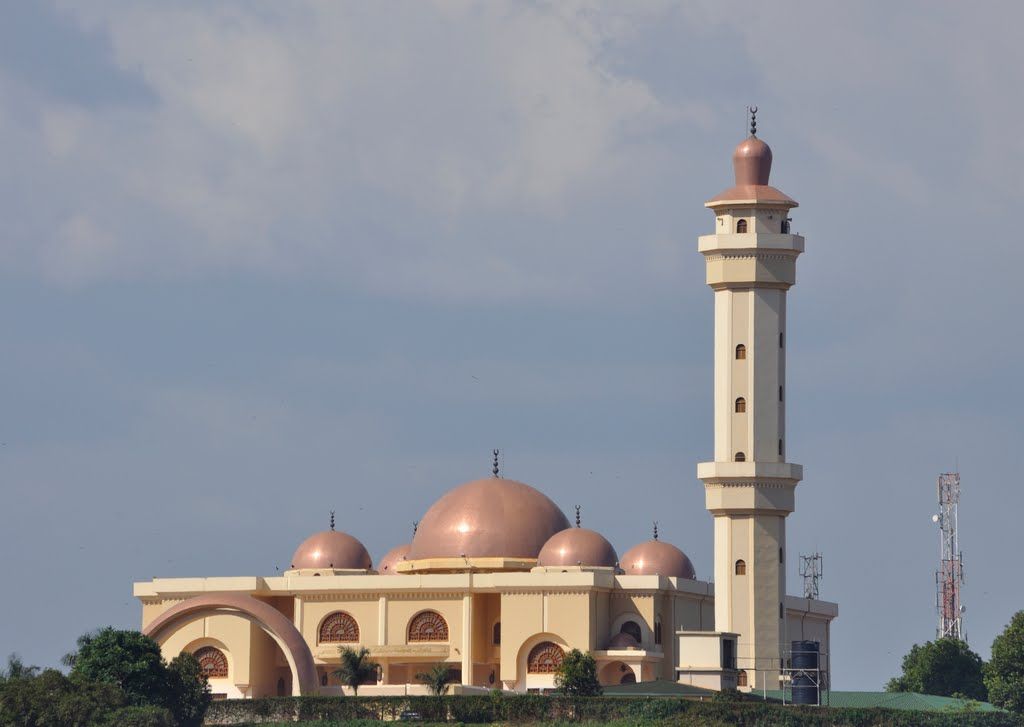
We were heading to the Gaddafi National Mosque. From the city center, its golden dome and towering minaret had seemed like a distant, inviting beacon. Now, standing at the gates, its sheer scale was humbling.
The Gaddafi National Mosque is impossible to miss on your visit to Kampala. Perched on one of the city’s seven hills, it commands attention.
Officially opened in 2007, it was a gift from Libya’s former leader, Muammar Gaddafi, to Uganda’s Muslim community. Today, it serves as the headquarters of the Uganda Muslim Supreme Council, a role that makes it a breathing center of faith and community life.
Inside the main prayer hall, we were enveloped by an atmosphere of serene grandeur. Our shoes were left at the door, and we walked barefoot across the vast, ornately patterned carpet.
Sunlight streamed through the windows, catching the dust motes in the air and illuminating the intricate Arabic calligraphy that adorns the walls and pillars.
Stepping inside, we were immediately struck by the vastness of the space. The hall can accommodate up to 15,000 worshippers, and even empty, it felt alive with possibility.
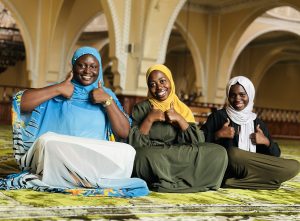
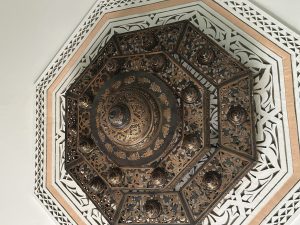
My friends, draped in their headscarves, admired the massive Egyptian chandeliers that hung from the high ceiling like elegant jewels. Our guide spoke in hushed tones, explaining the history, the architecture, and the daily rhythms of prayer that animated this sacred space.
We listened intently, aware that we were guests in a place of deep spiritual significance.
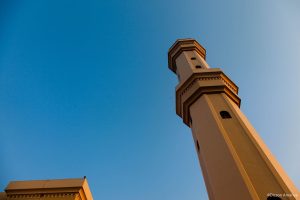
But the true heart of the adventure, we soon learned, lay upward. The minaret of the Gaddafi National Mosque rises 50.5 meters above the hill, a slender finger pointing toward heaven. It is the tallest structure on the Kampala skyline, visible from almost anywhere in the city.
The entrance to the tower was small and unassuming, leading to a narrow, spiral staircase of worn stone that seemed to twist endlessly into the sky. With a shared look of determination, we began to climb. The steps were steep and worn, and as we ascended, the only sounds were our heavy breathing.
My thighs burned, and I lost count of the steps somewhere past two hundred. We took turns leading, calling down words of encouragement to those behind. My friend behind me joked that we had earned our view through sweat, and she was absolutely right.
The climb stripped away the pretense of casual tourism and turned our visit into something more authentic. It felt like a pilgrimage within a pilgrimage.
Just when I thought my legs would give out, a blinding light appeared above through the small windows. We stepped out onto the narrow gallery at the top of the minaret, 166 feet above the ground, and the world fell away.
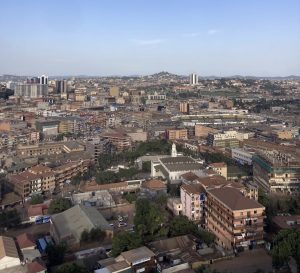
A collective “wow” escaped our lips as a 360-degree panorama of Kampala unfolded beneath us. The seven hills of the city were laid out like a map, each crowned with its own landmark.
We could see the tiny, ant-like figures of people going about their daily lives far below. The wind whipped around us, carrying the faint sounds of traffic and music from the streets. We stood shoulder to shoulder, pointing and exclaiming, trying to capture the moment with cameras and failing because no photograph could truly convey the feeling of being up there, suspended between earth and sky.
Finally, our legs shaky but our spirits soaring, we descended back to the solid ground. We also took a moment to explore the rest of the grand mosque, the peaceful library, the quiet courtyard, and the simple clinic that served the community.
As we walked back towards the gate, we paused at the entrance, turning for one last look at the majestic structure. Through the heat, the climb, and the shared experience, Gadaffi National Mosque had become a memory, a hilltop haven we had discovered together.